Local Real Estate News March 10, 2026

The Debate Over the One Boca Project: Vision vs. Preservation

The One Boca redevelopment proposal has become one of the most talked‑about and divisive issues in Boca Raton’s recent civic life. At its core, the plan would transform nearly 8 acres of downtown land — currently occupied by aging government buildings, surface parking, and underused spaces — into a mixed‑use destination with housing, retail, office space, a hotel, parks, and upgraded civic facilities. Voters are scheduled to decide the fate of the project in the March 10, 2026 election.

Why Supporters Say “Yes”

Proponents argue that One Boca is a once‑in‑a‑generation chance to revitalize Boca’s downtown and strengthen the city’s long‑term economic prospects. Supporters — including local business leaders and real estate advocates — say the project will bring new energy, create jobs, and replace outdated city buildings with modern civic facilities like a new City Hall, community center, and police substation. They also point to design revisions that increase green space and pedestrian connectivity near the Brightline station, framing the development as a way to create a vibrant, walkable core for residents and visitors alike.

Why Opponents Say “No”

On the other side, the grassroots group Save Boca and many longtime residents have pushed back strongly. They raise concerns that the project hands over public land for nearly a century under a private lease, increases traffic congestion in an already busy downtown, and could alter the city’s character. Critics also question the ballot language and transparency of the process, arguing that the benefits — especially promises about green space and park improvements — are overstated or misleading. For many in this camp, preserving public ownership of land like Memorial Park and resisting large‑scale development is paramount.

A Broader Civic Conversation

Beyond the details of zoning and architecture, the One Boca debate has tapped into deeper questions about growth, identity, and civic control. It has shaped political campaigns, sparked lawsuits and petition drives, and highlighted a growing divide between advocates for modernization and residents wary of rapid change. As the community heads to the polls, the vote on One Boca will not just determine a development project — it will reflect how Boca Raton residents see their city’s future.

Selling Your Home March 10, 2026

Easy, Affordable Ways to Boost Your Home’s Value

Selling a home can feel overwhelming, but increasing its appeal doesn’t always mean major renovations or breaking the bank. Often, small, affordable improvements can make a big difference in how buyers perceive your property—and even boost its value. Here are some simple strategies that can help you get the most out of your home without overspending.

1. Freshen Up with Paint

A fresh coat of paint is one of the easiest ways to make your home feel new and well-maintained. Neutral colors like soft grays, beiges, or whites create a blank canvas that allows buyers to imagine their own style in the space. Don’t forget to touch up trim, doors, and baseboards—they make a big visual impact.

2. Upgrade Light Fixtures

Lighting can transform a room’s ambiance. Swapping outdated fixtures for modern, energy-efficient options instantly updates a space. Even something as simple as replacing old bulbs with brighter, warmer lighting can make a room feel inviting.

3. Update Small Details

Sometimes it’s the small touches that matter most. Replacing outlet covers, cabinet hardware, and doorknobs is an affordable way to make your home look polished and cared for. Buyers notice these subtle details more than you might think.

4. Declutter and Minimize

A cluttered home can feel smaller and distract buyers from its best features. Go through each room and remove unnecessary items. Consider donating or storing excess furniture, décor, and personal items. Minimalism helps rooms appear larger and more open.

5. Deep Clean Everything

Clean homes show better. Steam-clean carpets, scrub bathrooms and kitchens, wash windows, and tackle often-overlooked areas like baseboards and ceiling fans. A sparkling home signals to buyers that it has been well cared for.

6. Boost Curb Appeal

First impressions matter. Simple touches like mowing the lawn, trimming bushes, planting flowers, or painting the front door can greatly enhance your home’s exterior appeal. Consider pressure washing siding and walkways for a fresh, welcoming look.

7. Consider Minor Upgrades

Other small upgrades, like adding a backsplash in the kitchen, updating faucets, or replacing outdated appliances, can pay off. Focus on improvements that offer a good balance of cost versus perceived value.

8. Stage Your Home

Even basic staging can help buyers visualize themselves living in the space. Arrange furniture to highlight room flow, add fresh linens or throw pillows, and make beds and seating areas look inviting. You don’t need a professional stager—strategic placement and a few decorative touches go a long way.

Bottom Line

Boosting your home’s value doesn’t always mean expensive renovations. Painting, updating fixtures, decluttering, and cleaning are easy, affordable ways to make a strong impression on buyers. Small, thoughtful improvements can lead to faster sales and potentially higher offers—making your home feel like a must-have property.

Home Buying Tips March 5, 2026

How to Choose the Right Lender When Buying a Home (and Avoid Costly Surprises)

When it comes to buying a home, choosing the right lender is just as important as choosing the right house. With mortgage rates recently dipping under 6%, many buyers are excited about the potential savings they can lock in. But low advertised rates can be misleading if you do not understand the full cost behind them.

Why Mortgage Rates Matter

Interest rates directly impact your monthly payment and the total cost of your loan over time. A lower rate can save you thousands of dollars over the life of the loan, which is why so many buyers focus on that number first.

But here’s the catch: the rate you see quoted at the beginning is not always the rate you get at closing.

Beware of “Free” Low Rates

Some lenders advertise ultra-low rates to get your attention. The problem is that these low rates often come with strings attached. In order to receive that advertised rate, buyers may be required to purchase discount points or pay other fees at closing to “buy down” the rate.

A discount point is essentially prepaid interest — typically costing you 1% of the loan amount per point — in exchange for a lower interest rate. That up-front cost can add up quickly.

The reality? You might be sold on a 5.99% or lower rate — but when it comes time to sign the closing documents, you find out you owe thousands of dollars to secure it.

A Real Example: Read the Fine Print

I recently assisted a buyer who experienced this first-hand. At the beginning of the process, he was excited because his lender quoted him a very low interest rate. This rate was a big reason he chose to move forward with that lender.

But just before closing, he was surprised to learn that he would need to bring nearly $20,000 to the table just to buy down the rate that had been advertised to him. That cost was not something he had planned on — and it significantly changed his closing day experience.

This is exactly the kind of scenario you want to avoid.

How to Choose a Lender the Smart Way

Here are some tips to make sure you are truly comparing apples to apples when choosing a mortgage lender:

1. Ask for a Loan Estimate Early
A Loan Estimate is a standard form lenders are required to provide that outlines your projected interest rate, monthly payment, closing costs, and any points or fees. Compare Loan Estimates from multiple lenders.

2. Understand Discount Points
Ask your lender to explain how many points (if any) are required to secure the advertised rate, and how much those points will cost you at closing.

3. Compare True Costs, Not Just Rates
A slightly higher rate with lower upfront costs can be a better deal for many buyers — especially if you plan to sell or refinance before the break-even point on the point purchase.

4. Clarify Fees and Closing Costs Up Front
Make sure you get a clear picture of all lender fees, origination charges, third-party fees, and prepaid items well before closing.

5. Work With Someone You Trust
Communication is key. Choose a lender who takes the time to educate you and answer your questions — not just sell you on a number.

Bottom Line

Mortgage rates under 6% are great news for buyers — but knowing what you are really paying for that rate is critical. Don’t be shocked at the closing table by a large upfront cost to buy down your rate. Ask questions, compare loan estimates, and choose a lender who puts transparency and your best interests first.

If you have questions about how mortgage rates and loan costs work — or if you want recommendations for lenders who explain everything clearly — feel free to reach out!

Opinion March 4, 2026

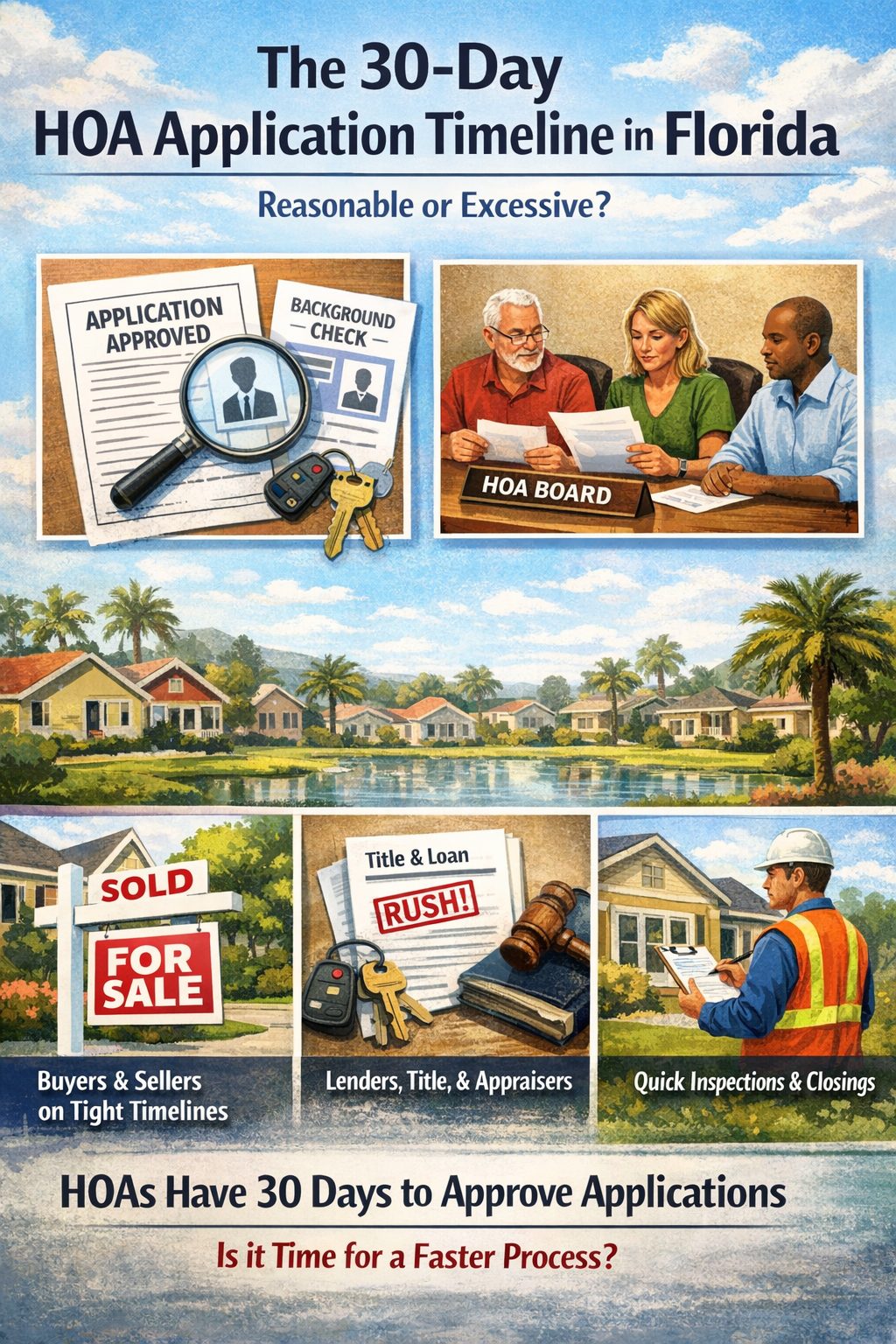
The 30-Day HOA Application Timeline in Florida: Reasonable or Excessive?

If you have ever bought or sold a home in Florida that is governed by a homeowners association, you know the waiting game that can follow once a contract is signed. In our state, HOAs typically have up to 30 days to process and approve (or deny) an application.

Let me start by saying this: I empathize with HOA board members.

I served on an HOA board for years. It is a volunteer position. It is often thankless. And at times, it feels like a second full-time job. You deal with budgets, maintenance issues, violations, vendor contracts, and neighbor disputes. I understand firsthand that it is not easy, and most board members are simply trying to protect their community and property values.

That being said, we need to have an honest conversation about the 30-day timeline.

In a typical real estate transaction, the buyer is on strict deadlines from day one. Inspections are usually completed within 7 to 10 days. Loan approval often must be secured within 21 to 30 days. Lenders, title companies, appraisers, and even government departments responsible for lien searches and title searches all operate on tight timelines. If they do not, deals fall apart.

These parties are handling complex financial underwriting, property valuation, compliance, title review, and legal documentation. They are responsible for significantly more moving parts and liability than simply reviewing an HOA application.

Yet the HOA often has the longest window of all.

Here is what the process typically looks like:

  • The buyer submits the completed application to the management company.
  • The management company runs the background checks.
  • The full application and background report are presented to the HOA board.
  • The board reviews criminal history (if any), verifies vehicle information, confirms pet compliance, and ensures the applicant meets community guidelines.
  • A decision is made.

That is it.

In most communities, this is not a complicated underwriting process. It is a review process. The heavy lifting (background screening) is usually outsourced and completed quickly.

So why does it take up to 30 days?

When a transaction is held up by HOA approval, everyone feels it:

  • Buyers who have locked in interest rates and scheduled movers
  • Sellers who are coordinating their next purchase
  • Lenders managing rate expirations
  • Title companies and attorneys preparing closing packages
  • Appraisers and inspectors working within contract deadlines

A delayed approval can push back closing, create stress, and in some cases, jeopardize the entire transaction.

Again, I understand the volunteer nature of HOA boards. I respect it. I have lived it. But if lenders can underwrite a six-figure or seven-figure loan in three weeks, and title companies can clear ownership and lien issues in less time, it raises a fair question about whether 30 days should be the norm for an application review.

Most of the time, these applications do not require deep investigation. They require organization, timely communication, and a scheduled review.

I believe HOAs can protect their communities while also respecting the realities of modern real estate timelines. Shorter review windows, more frequent board review cycles, or delegated preliminary approvals (where appropriate) could go a long way toward making the process smoother for everyone involved.

The Florida market moves quickly. Buyers and sellers are operating under intense financial and contractual pressure. A more efficient HOA approval process would not just help real estate agents. It would help homeowners.

And at the end of the day, that is who HOAs exist to serve.

Real Estate Education March 3, 2026

Beware of Bad Real Estate Advice from Non-Professionals

In real estate, everyone has an opinion. Your coworker who bought a condo in 2012. Your uncle who flipped a house once. That friend who scrolls listings at night and suddenly thinks they are a market expert.

Over the years, I have seen people spend unnecessary money on purchases, leave money on the table when selling, miss out on homes they truly loved, and even fail to sell their homes altogether, simply because they listened to bad advice from someone who is not in the business every day.

While advice from people in your life may be well-intentioned, real estate decisions are too important and too expensive to rely on opinions that are not grounded in experience, data, and current market knowledge.

Here is why taking real estate advice from non-professionals can cost you.

1. “Wait… the market is going to crash.”

This is one of the most common things buyers hear. Someone reads a headline or remembers 2008 and suddenly becomes a housing forecaster. The reality is that real estate markets are hyper-local. What is happening nationally may not reflect what is happening in your neighborhood.

Trying to perfectly time the market often leads to missed opportunities, higher prices later, or reduced purchasing power if interest rates rise. Real estate should be approached strategically, not emotionally.

2. “Always offer low. You can negotiate up.”

In some markets, that strategy can work. In others, it can cost you the home entirely. A strong but reasonable offer shows a seller you are serious. A lowball offer can offend the seller or remove you from consideration, especially if there are multiple offers.

Real estate is not just about price. Terms matter. Financing strength matters. Timelines matter. A professional understands how to structure an offer that fits the current market, not a generic negotiation rule.

3. “You do not need your own Realtor. Just use the listing agent.”

The listing agent represents the seller. Their duty is to get the best terms and price for the seller. Having your own representation ensures someone is advocating for your interests, reviewing contracts carefully, identifying risks, and negotiating on your behalf.

4. “Skip the inspection. The house looks fine.”

This advice can be extremely costly.

A home can look beautiful cosmetically and still have serious issues with the roof, plumbing, electrical, or HVAC systems. An inspection is not about nitpicking small cosmetic flaws. It is about protecting yourself from expensive surprises.

In Florida especially, inspections can play an even bigger role:

  • Some lenders require a 4-point inspection for certain properties, particularly older homes. This report evaluates the roof, electrical, plumbing, and HVAC systems and can impact your ability to secure financing.
  • Insurance companies often require or heavily rely on 4-point reports before issuing a policy.
  • A wind mitigation report can result in significant insurance discounts if the home has qualifying storm protection features such as impact windows, roof tie-downs, or a newer roof.

Skipping inspections does not just risk hidden repair costs. It can also affect your financing and insurance premiums, which directly impacts your monthly expenses.

5. “Never use your agent’s home inspector.”

This advice sounds protective, but it is often misunderstood.

The concern is that an inspector recommended by an agent might “go easy” on a property to keep the deal together. In reality, reputable agents work with licensed, insured inspectors whose businesses rely on being thorough and honest.

The last thing any good agent wants is for their clients to call them after closing with major issues that were missed. That hurts the client, damages trust, and harms the agent’s reputation. A thorough inspection protects everyone involved.

A good agent should always encourage you to choose whoever you are most comfortable with. They may provide names of inspectors they have worked with before, but the choice is yours. The key is not who introduced you. The key is whether the inspector is licensed, experienced, detailed in their reporting, and willing to walk you through the findings.

6. “Never use your agent’s lender.”

This is another common warning that lacks nuance.

The idea behind it is that a lender recommended by your agent might be part of some behind-the-scenes arrangement. In reality, experienced agents typically recommend lenders because they have a track record of closing on time, communicating clearly, and solving problems before they become deal-breakers.

A strong local lender can:

  • Provide accurate pre-approvals
  • Help structure competitive offers
  • Communicate directly with listing agents
  • Navigate underwriting issues efficiently

That said, you should absolutely shop rates and compare options. The goal is not blind loyalty. The goal is competence and reliability. If your agent recommends a lender, it should be because they have seen that lender perform consistently.

6. “Renovations always increase value.”

Not all upgrades add equal value. Some improvements are highly personal and may not appeal to future buyers. Over-improving for the neighborhood can hurt resale value.

A real estate professional who understands local comparable sales can help guide improvements that align with buyer demand and maximize return on investment.

7. Advice Without Context

The biggest issue with non-professional advice is lack of context. Your friend may have bought in a different state, during a different market cycle, with different financing, and different goals. What worked for them may not apply to you.

Real estate decisions depend on:

  • Your timeline
  • Your financial goals
  • Current local inventory
  • Interest rates
  • Insurance requirements
  • Neighborhood trends
  • Contract and legal considerations

There is no one-size-fits-all strategy.

Why Professional Guidance Matters

A licensed real estate professional studies the market daily, negotiates contracts regularly, understands financing and insurance requirements, and tracks local data. More importantly, they tailor advice to your specific situation.

That does not mean you ignore input from people you trust. It simply means that well-meaning opinions should not replace informed, professional guidance.

Buying or selling a home is one of the largest financial decisions most people will ever make. Make sure your strategy is built on real data, real experience, and advice that fits your goals, not just commentary from the sidelines.

Real Estate Education March 2, 2026

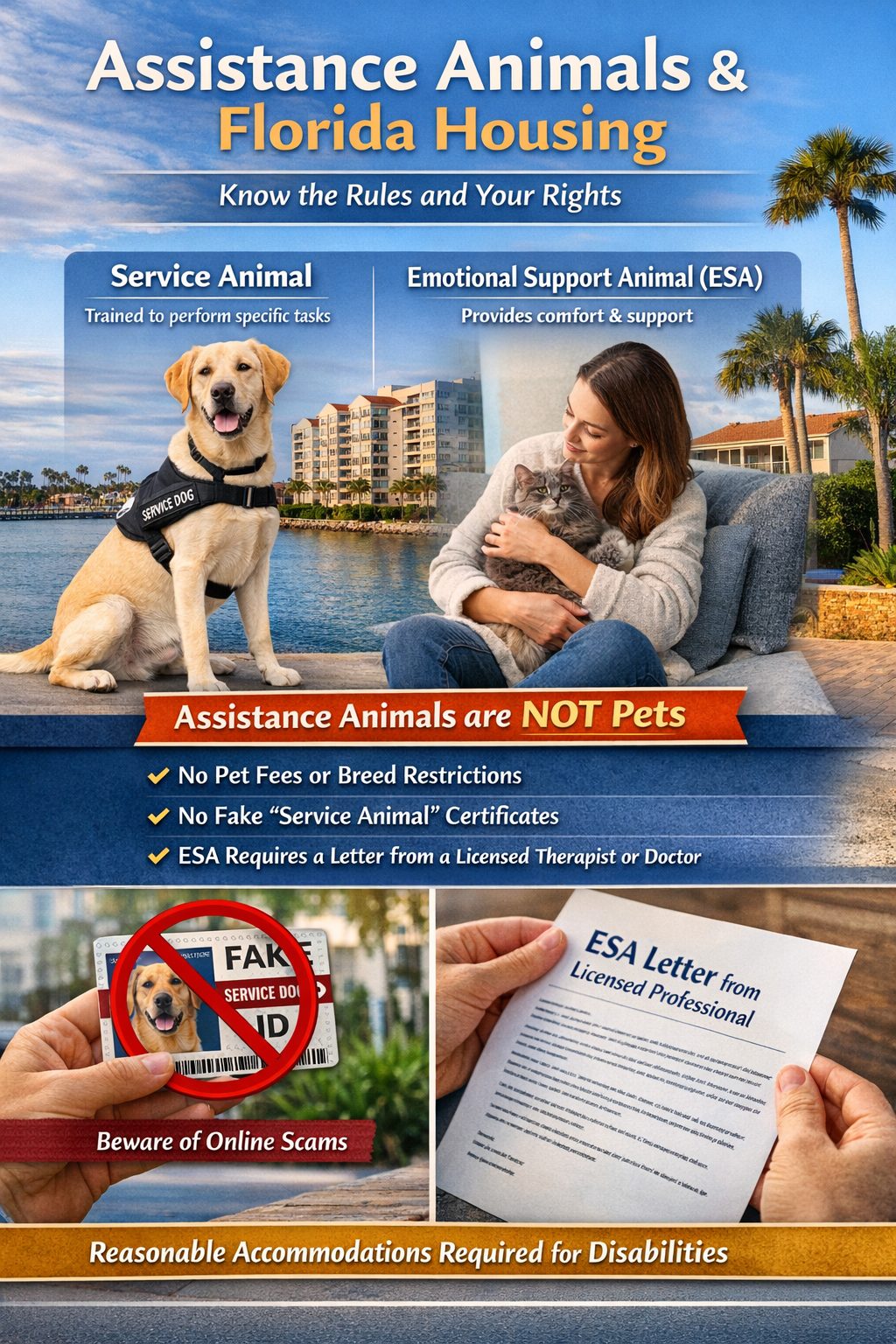
Assistance Animals and Florida Housing: What Buyers, Sellers, Tenants, and Landlords Need to Know

Assistance animals are a frequent topic in Florida real estate transactions, especially in condominium and HOA communities with pet restrictions. Whether you are a landlord, seller, buyer, or tenant, it is important to understand how federal and Florida housing laws treat assistance animals and how they differ from pets.

Assistance Animals Are Not Pets

Under fair housing laws, assistance animals are not considered pets. That distinction is critical. Because they are not pets, pet restrictions, pet fees, pet deposits, and breed or weight limitations generally do not apply to them.

In Florida housing, assistance animals fall into two main categories:

  1. Service animals
  2. Emotional support animals (also called support animals or ESAs)

While people often use these terms interchangeably, they are legally different.

Service Animals

Under the Americans with Disabilities Act (ADA), a service animal is a dog that is individually trained to perform specific tasks or work for a person with a disability. Examples include guiding a person who is visually impaired, alerting someone who is deaf, pulling a wheelchair, or detecting and responding to a medical condition.

According to the U.S. Department of Justice, there is no official government-issued certification or registration for service animals. Many individuals and organizations sell service animal certifications, ID cards, vests, and online registration documents. However, these documents do not convey any rights under the ADA, and the Department of Justice does not recognize them as proof that a dog is a service animal.

In a housing context, landlords and associations must be careful about what they can and cannot ask. Generally, if the disability and the need for the service animal are not obvious, housing providers may request reliable documentation that confirms the disability-related need for the animal.

Emotional Support Animals (ESAs)

Emotional support animals provide comfort or emotional support that alleviates one or more symptoms of a person’s disability. Unlike service animals, ESAs are not required to have specialized task training.

To qualify for an ESA in a housing context, a letter must be issued by a licensed mental health professional or physician verifying their patient’s need for a support animal. This letter should establish that:

  • The individual has a disability; and
  • The animal provides support that alleviates at least one symptom or effect of that disability.

Importantly, there is no requirement that an ESA wear a tag, harness, vest, or special identification indicating that it is a support animal. The absence of visible identification does not invalidate the accommodation request.

Florida Housing and Reasonable Accommodations

In Florida, assistance animal issues in housing are generally governed by the federal Fair Housing Act and Florida’s Fair Housing Act. Housing providers must make reasonable accommodations for individuals with disabilities, which includes allowing assistance animals even in “no pet” communities.

However, approval is not automatic in every situation. The request must be reasonable and supported by appropriate documentation when required. A housing provider may deny a request if:

  • The animal poses a direct threat to the health or safety of others;
  • The animal would cause substantial physical damage to property; or
  • The request imposes an undue financial or administrative burden.

Each situation should be evaluated individually, not based on assumptions about breed, size, or stereotypes.

Common Misunderstandings in Real Estate Transactions

Here are a few frequent points of confusion in Florida real estate:

  • Assistance animals are not pets and should not be described as pets in listing materials, leases, or HOA communications.
  • Pet deposits and pet rent generally do not apply to approved assistance animals.
  • Online certificates or registrations alone are not legally sufficient proof of service animal status under the ADA.
  • ESAs do not need special gear or visible identification.
  • Proper documentation from a licensed medical or mental health professional is typically required for ESAs in housing situations.

For sellers and landlords, mishandling an assistance animal request can create significant legal risk. For buyers and tenants, understanding your rights and responsibilities can help avoid unnecessary conflict.

Why This Matters in Florida

In markets like South Florida, where condominiums and HOA communities are common and pet restrictions are often strict, assistance animal rules frequently arise during contract periods, lease approvals, and association applications.

Clear communication, proper documentation, and an understanding of the law can make the process much smoother for everyone involved.

If you are buying, selling, or leasing property in Florida and have questions about how assistance animal laws may impact your transaction, it is wise to consult with a knowledgeable real estate professional and, when appropriate, a qualified attorney.

Selling Your Home March 1, 2026

Why Not Offering a Buyer’s Agent Commission Can Cost You More Than You Think

In today’s changing real estate landscape, some sellers are considering whether they should offer compensation to a buyer’s agent. On the surface, it may seem like an easy way to “save” money. But in reality, not offering a buyer’s agent commission can limit your exposure, reduce competition, and ultimately cost you more in the long run. Here’s why.

1. You Shrink Your Buyer Pool

Most buyers are still working with agents. If you choose not to offer compensation, many buyers will either skip your home entirely, ask you to cover their agent’s fee in the contract anyway, or reduce their offer price to offset what they now have to pay. The result is fewer showings and less demand. And in real estate, less demand usually means less leverage.

2. Less Competition Means Lower Offers

Strong sales prices are driven by competition. When multiple buyers are interested, you gain negotiating power. If your property becomes less attractive due to commission structure, you risk fewer offers, longer time on market, and price reductions. Even a small reduction in competition can cost far more than the commission you were trying to avoid.

3. Buyers Often Don’t Have Extra Cash

Most buyers are already stretching to cover down payment, closing costs, inspections, and moving expenses. If they now also need to pay their agent out of pocket, it may push them out of qualification, reduce what they can offer, or make your home financially less feasible. Many buyers will simply gravitate toward homes where compensation is already structured.

4. It Can Affect How Your Home Is Presented

While ethical agents show homes that fit their clients’ needs regardless of commission, properties offering cooperative compensation are easier to present and structure offers around. Simpler transactions tend to move faster and more smoothly.

5. You May End Up Paying Anyway

Even if you don’t advertise compensation upfront, many buyer offers will request it as part of the contract. At that point, you are negotiating it under pressure once you are emotionally invested in a deal.

6. Net Proceeds Matter More Than Line Items

The goal is not to avoid a specific expense. The goal is to maximize your net. If offering a buyer’s agent commission expands your buyer pool, increases competition, shortens days on market, and strengthens your negotiating position, it may actually increase your bottom line.

Final Thoughts

Real estate is a market driven by exposure and competition. The more qualified buyers who see and feel comfortable pursuing your home, the stronger your position becomes. Eliminating buyer agent compensation may sound strategic, but it often works against your best financial outcome.