

 Facebook
 X
X
 Pinterest
 Copy Link
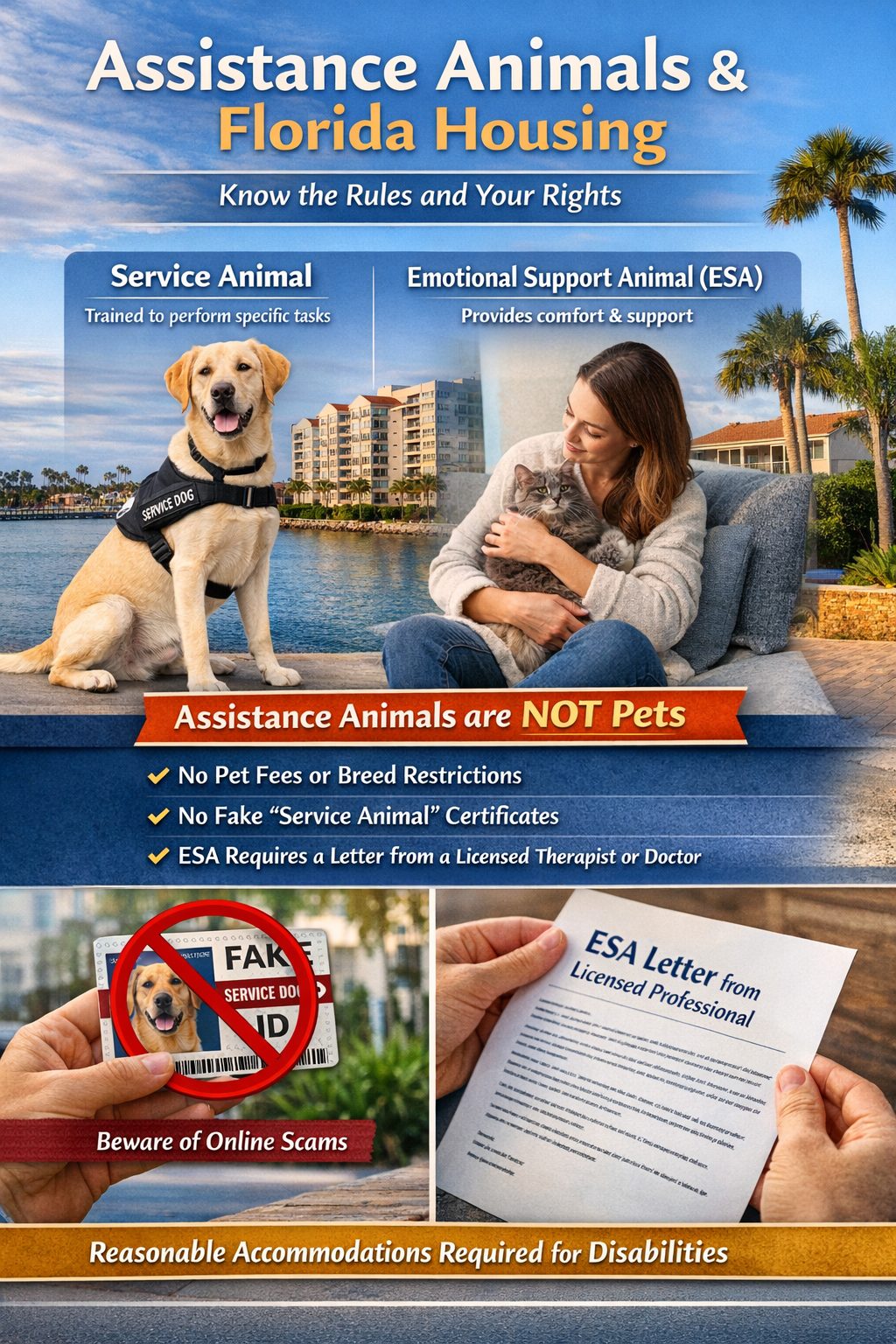
Assistance animals are a frequent topic in Florida real estate transactions, especially in condominium and HOA communities with pet restrictions. Whether you are a landlord, seller, buyer, or tenant, it is important to understand how federal and Florida housing laws treat assistance animals and how they differ from pets.
Assistance Animals Are Not Pets
Under fair housing laws, assistance animals are not considered pets. That distinction is critical. Because they are not pets, pet restrictions, pet fees, pet deposits, and breed or weight limitations generally do not apply to them.
In Florida housing, assistance animals fall into two main categories:
- Service animals
- Emotional support animals (also called support animals or ESAs)
While people often use these terms interchangeably, they are legally different.
Service Animals
Under the Americans with Disabilities Act (ADA), a service animal is a dog that is individually trained to perform specific tasks or work for a person with a disability. Examples include guiding a person who is visually impaired, alerting someone who is deaf, pulling a wheelchair, or detecting and responding to a medical condition.
According to the U.S. Department of Justice, there is no official government-issued certification or registration for service animals. Many individuals and organizations sell service animal certifications, ID cards, vests, and online registration documents. However, these documents do not convey any rights under the ADA, and the Department of Justice does not recognize them as proof that a dog is a service animal.
In a housing context, landlords and associations must be careful about what they can and cannot ask. Generally, if the disability and the need for the service animal are not obvious, housing providers may request reliable documentation that confirms the disability-related need for the animal.
Emotional Support Animals (ESAs)
Emotional support animals provide comfort or emotional support that alleviates one or more symptoms of a person’s disability. Unlike service animals, ESAs are not required to have specialized task training.
To qualify for an ESA in a housing context, a letter must be issued by a licensed mental health professional or physician verifying their patient’s need for a support animal. This letter should establish that:
- The individual has a disability; and
- The animal provides support that alleviates at least one symptom or effect of that disability.
Importantly, there is no requirement that an ESA wear a tag, harness, vest, or special identification indicating that it is a support animal. The absence of visible identification does not invalidate the accommodation request.
Florida Housing and Reasonable Accommodations
In Florida, assistance animal issues in housing are generally governed by the federal Fair Housing Act and Florida’s Fair Housing Act. Housing providers must make reasonable accommodations for individuals with disabilities, which includes allowing assistance animals even in “no pet” communities.
However, approval is not automatic in every situation. The request must be reasonable and supported by appropriate documentation when required. A housing provider may deny a request if:
- The animal poses a direct threat to the health or safety of others;
- The animal would cause substantial physical damage to property; or
- The request imposes an undue financial or administrative burden.
Each situation should be evaluated individually, not based on assumptions about breed, size, or stereotypes.
Common Misunderstandings in Real Estate Transactions
Here are a few frequent points of confusion in Florida real estate:
- Assistance animals are not pets and should not be described as pets in listing materials, leases, or HOA communications.
- Pet deposits and pet rent generally do not apply to approved assistance animals.
- Online certificates or registrations alone are not legally sufficient proof of service animal status under the ADA.
- ESAs do not need special gear or visible identification.
- Proper documentation from a licensed medical or mental health professional is typically required for ESAs in housing situations.
For sellers and landlords, mishandling an assistance animal request can create significant legal risk. For buyers and tenants, understanding your rights and responsibilities can help avoid unnecessary conflict.
Why This Matters in Florida
In markets like South Florida, where condominiums and HOA communities are common and pet restrictions are often strict, assistance animal rules frequently arise during contract periods, lease approvals, and association applications.
Clear communication, proper documentation, and an understanding of the law can make the process much smoother for everyone involved.
If you are buying, selling, or leasing property in Florida and have questions about how assistance animal laws may impact your transaction, it is wise to consult with a knowledgeable real estate professional and, when appropriate, a qualified attorney.
