

 Facebook
 X
X
 Pinterest
 Copy Link
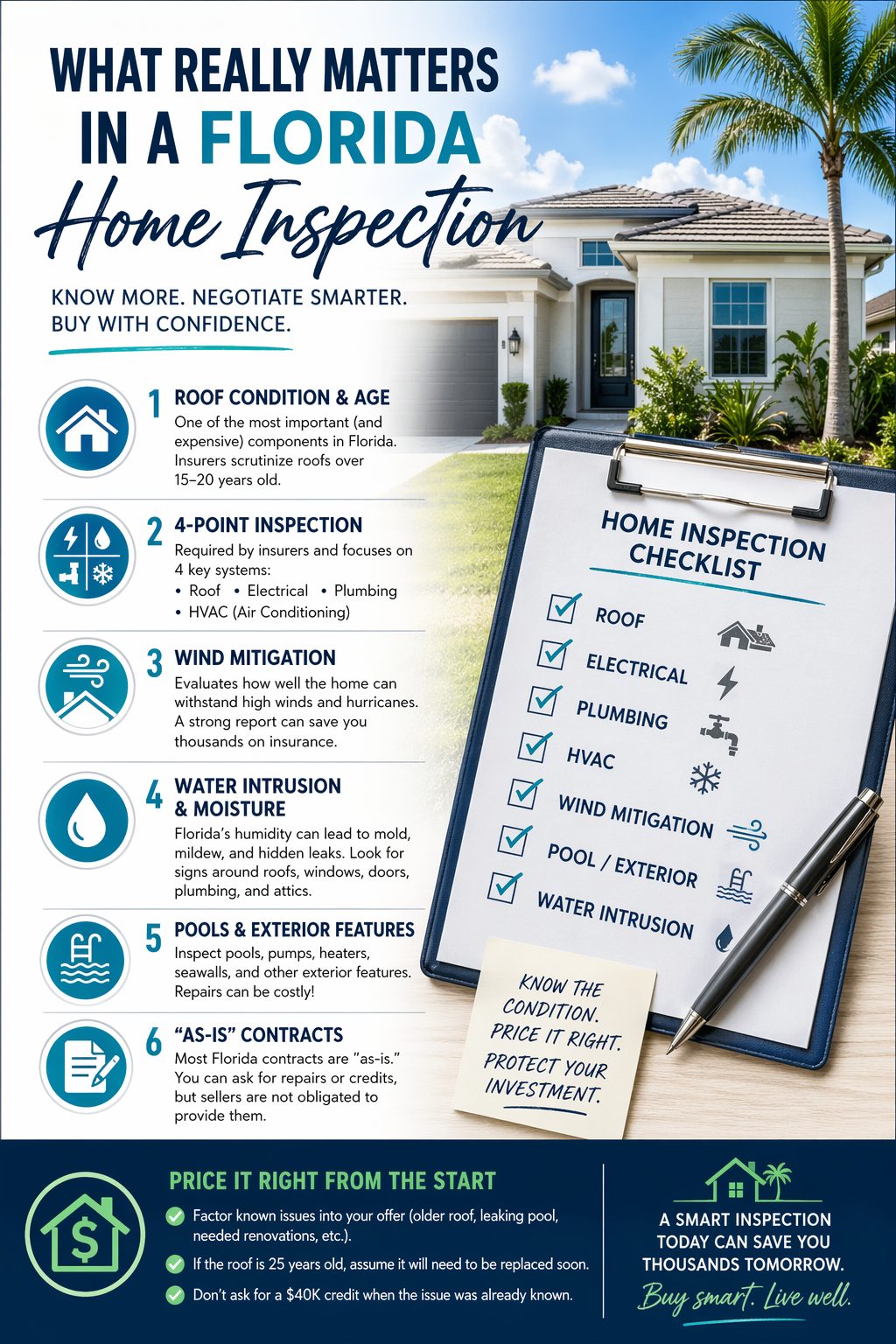
Buying a home in Florida comes with a unique set of considerations, and the inspection period is where everything comes into focus. While no home is perfect, knowing what to prioritize during your inspection can help you make a confident, informed decision and avoid costly surprises down the road.
Here are the most important areas to focus on when evaluating a home in Florida:
1. Roof Condition and Age
In Florida, the roof is one of the most critical (and expensive) components of a home.
Between intense sun, heavy rains, and hurricane exposure, roofs take a beating. Insurance companies are also very sensitive to roof age, and this can directly impact your ability to secure coverage.
Key things to look for:
- Age of the roof (many insurers scrutinize roofs over 15–20 years old)
- Signs of active leaks or prior repairs
- Remaining useful life
If a roof is nearing the end of its lifespan, that is not necessarily a dealbreaker. But it is something that should absolutely be factored into your offer price from the start.
2. Electrical, Plumbing, HVAC (The “4-Point” System)
In Florida, insurance companies often require a 4-point inspection, which focuses on four major systems:
- Roof
- Electrical
- Plumbing
- HVAC (air conditioning)
This report is separate from your full home inspection and is specifically used for insurance underwriting.
Common red flags include:
- Outdated electrical panels (like Federal Pacific or Zinsco)
- Old or polybutylene plumbing
- Aging or non-functional HVAC systems
Even if a home “looks great,” these behind-the-scenes systems can create insurance challenges or require immediate upgrades.
3. Wind Mitigation Inspection
A wind mitigation report is another Florida-specific inspection that can have a major impact on your insurance premiums.
This report evaluates how well the home is built to withstand high winds and hurricanes, including:
- Roof shape (hip roofs often receive better credits)
- Roof-to-wall connections
- Impact windows or shutters
- Secondary water resistance
A strong wind mitigation report can save you thousands per year in insurance, while a weak one can increase your costs significantly. It is one of the most overlooked, yet most valuable, reports in the process.
4. Water Intrusion and Moisture Issues
Florida’s humidity makes homes especially vulnerable to:
- Mold
- Mildew
- Hidden leaks
Inspectors will check for signs of water intrusion around:
- Windows and doors
- Roof penetrations
- Plumbing fixtures
- Attics and ceilings
Even small issues can turn into major repairs if left unaddressed, so this is an area you do not want to gloss over.
5. Pool and Exterior Features
If the home has a pool, seawall, or other exterior features, these should be evaluated carefully.
For pools in particular:
- Look for leaks
- Check equipment condition (pump, heater, filtration system)
- Assess surface condition (resurfacing can be costly)
These are often big-ticket items that buyers forget to account for until it is too late.
6. “As-Is” Contracts: What That Really Means
In Florida, most purchase contracts are written as “as-is.”
That does not mean you cannot ask for repairs or credits. You absolutely can.
However, it is important to understand:
- Sellers are not obligated to make any repairs
- Sellers are not required to offer credits
- Your main leverage is the ability to cancel within the inspection period
This is why strategy matters before you even go under contract.
7. Pricing It Right From the Beginning
When my clients are preparing to make an offer, I always encourage them to factor in known or expected issues upfront.
For example:
- If the roof is 25 years old, assume replacement is coming soon
- If the pool is leaking, expect repair costs
- If the home needs renovations, build that into your number
What you do not want to do is ignore these realities, go under contract at a higher price, and then try to negotiate a large credit later.
A common scenario:
A buyer offers full price on a home with an aging roof, then asks for a $40,000 credit after the inspection confirms what was already obvious.
That approach often leads to frustration on both sides and can cause deals to fall apart.
A stronger strategy is:
- Acknowledge the condition upfront
- Price it into your offer
- Use the inspection to uncover unexpected issues, not predictable ones
Final Thoughts
A home inspection is not about finding a perfect house. It is about understanding the true condition of the property and making a smart financial decision.
In Florida, that means paying close attention to:
- Roof condition
- Major systems (4-point inspection)
- Wind mitigation factors
- Moisture and water intrusion
- Exterior features like pools
When you combine a thorough inspection with a well-informed offer strategy, you put yourself in the best position to protect your investment and move forward with confidence.
